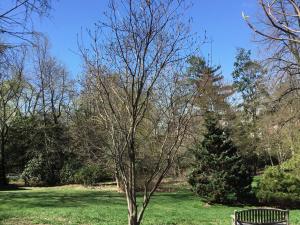
Trees on the Yale Nature Walk

Tree ID: 112
Date of tree entry: February 25, 2021
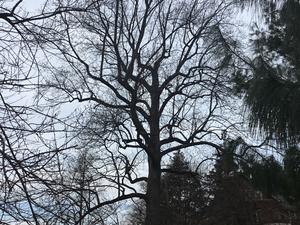
The swamp white oak is native to North America (Rogers). Historically, the swamp white oak has served as a food source for Native Americans and early colonists. The acorns, whether raw or cooked, have been incorporated into early American diets (Nemson). In addition, Native American communities have used the oak galls as a source of dye and as a medicinal treatment for constipation, cholera, and bone damage (Nemson) Today, the swamp white oak is used for lumber, commonly for construction, furniture, and flooring purposes because of its hardness and the knotty character that lowers its commercial value (Nemson). The oak is also commonly used for landscaping purposes, providing ample shade and tolerable of numerous environments (Nemson).
Tree ID: 113
Date of tree entry: February 5, 2020
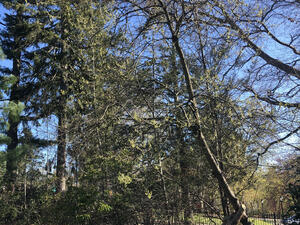
A tall, skinny tree that is leaning to a sharp angle. It has two large branches holding it up so that it does not fall, however it does not look to be slanted to the point of being uprooted. The branches begin nearer to the top of the tree and are thin and sparce.
Tree ID: 111
Date of tree entry: February 25, 2021
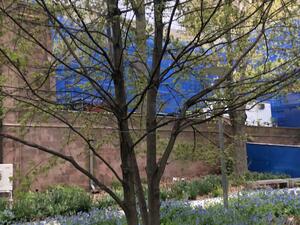
The red maple, true to its name, produces fabulous red flowers, seeds, and foliage. The flowers appear first, in early spring, and the leaves turn bright red in late summer, before most other deciduous trees. Currently, the red maple has no leaves, however, we expect some lovely red foliage to appear as the weather warms. Some distinctive features of the tree: its roots are exposed and form a wide, circular base, some branches appear to be cut off, and it looks as though there are fungi in the holes.
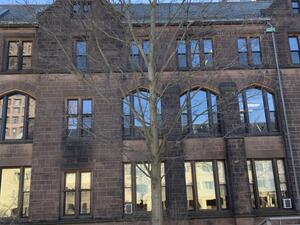
Tree ID: 110
Date of tree entry: February 5, 2020
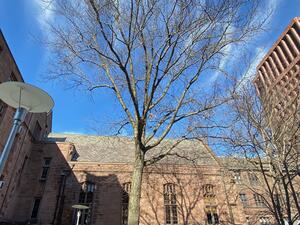
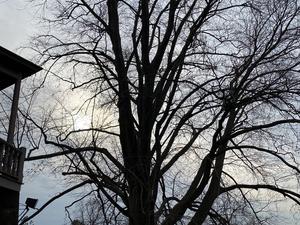
Located next to Sage Hall, this Northern Red Oak lumbers over its neighboring foliage.
Tree ID: 106
Date of tree entry: February 5, 2020
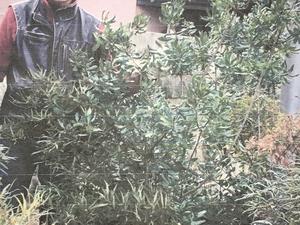
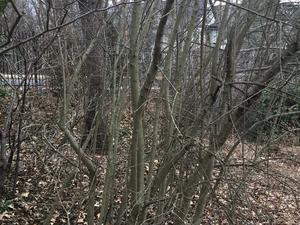
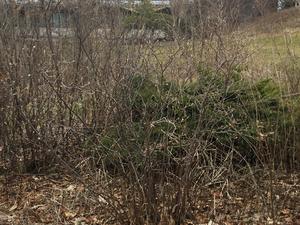
Myrica pensylvanica is an upright semi-evergreen shrub that often spreads by suckers to form colonies. Northern Bayberry is noted for its ornamental silver berries in winter, its winter salt spray tolerance, and its adaptability to urban stresses or wet sites, making it a perfect asset to a centralized location on Yale's campus.
Tree ID: 118
Date of tree entry: February 4, 2020
Tree ID: 116
Date of tree entry: February 4, 2020
Tree ID: 119
Date of tree entry: February 4, 2020
Tree ID: 115
Date of tree entry: February 4, 2020
Tree ID: 99
Date of tree entry: February 7, 2019
This tree is on the slope leading to Marsh Botannical Gardens. It leans downhill and gives a delicate impression with one short trunk and seven thinner trunks branching off. It has a scaly bark and blooms in June. While most American smoketrees have short trunks, this tree has an especially short trunk because it was hit by a neighboring redwood as a young tree. This fall split the trunk into eight small branches. One was shaved off in March, so now there are seven branches coming out of the trunk and its diameter at breast height is smaller.

Pages