Robinia pseudoacacia

Tree ID: 201
Date of tree entry: February 4, 2026
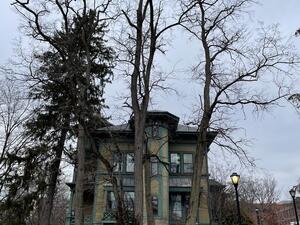
This Black Locust Tree is found across Prospect Street from Sterling Chemistry Laboratory, and just up the hill from Ingalls Ice Rink. If you were a squirrel that lived in this tree, you would be able to see students walking to their laboratory classes in the morning and fans coming to cheer for...
A black locust near SCL
Tree ID: 178
Date of tree entry: February 9, 2023
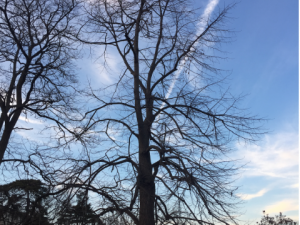
This tree has five individual structures, each reaching about the same height. Standing across from SCL, the tree frames 230 Prospect street and offers shade to those leaving the parking complex behind the Yale Interdisciplinary Center for Bioethics. A squirrel has been spotted on this tree and the...
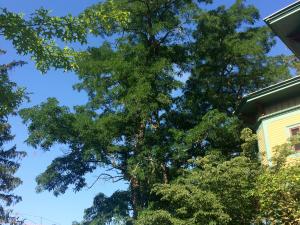
Black locust tree at Marsh Botanical Garden
Tree ID: 76
Date of tree entry: February 6, 2018
The black locust is native to United States, although it has been planted all over North America, Europe, Asia, and South Africa. The species, Robinia pseudoacacia, is a deciduous angiosperm that is considered by many to be an invasive species. The wood of the black locust is very durable and used...
Tree ID: 44
Date of tree entry: February 5, 2015
Although it may not have any of the familiar green pods we've come to know from the food aisle, the black locust tree belongs to the pea family, Fabaceae. It's native to the southeastern United States and also the lower slopes of the Appalachian Mountains. A deciduous tree with short,...
Subscribe to Robinia pseudoacacia