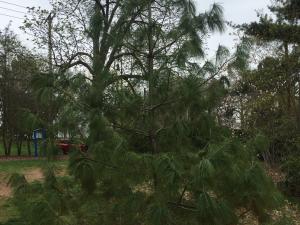
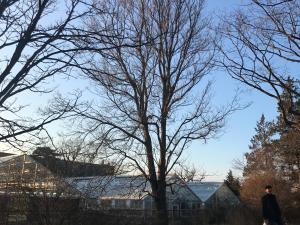
Observational details:
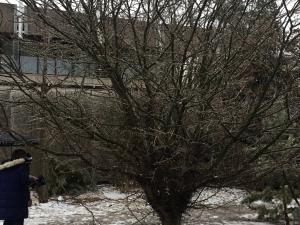
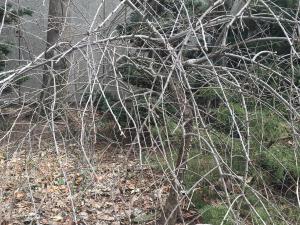
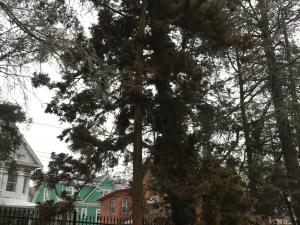
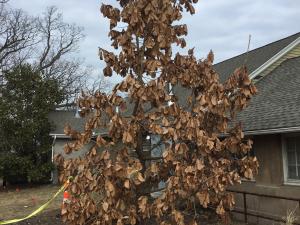
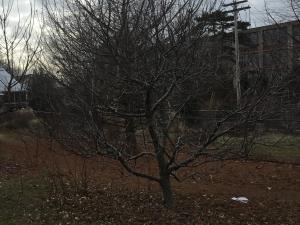
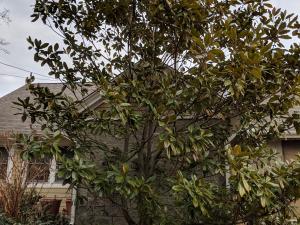
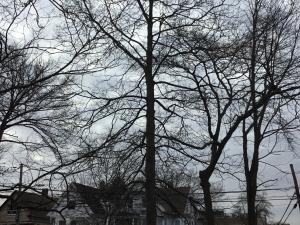
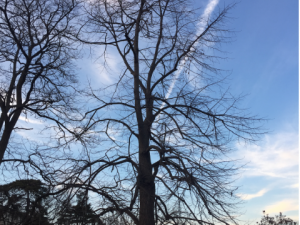
The Korean oak was found amidst a construction site with a torn branch. It stood surveying the area as the last tree standing.
Biological background:
Quercus dentata is also known as the Korean oak, daimyo oak, or the Japanese emperor oak. The Korean oak is a deciduous tree, meaning it loses its leaves once a year. It is also an angiosperm, or a flowering plant, and it is a eudicot. This can be observed macroscopically from the venation of the leaves, and would also be apparent from the anatomy of the seed and the organization of vascular tissue within the tree. This specimen is 7.5 meters, or approximately 24 feet tall, and the species can grow to up to 20-25 meters. The Korean oak also has remarkably large leaves for its size, growing up to 40cm long and 30cm wide. Typically, the Korean oak flowers in May, with mature acorns appearing between September and October.
Geographic distribution:
Quercus dentata is originally native to East Asia, specifically Japan, China, and the Korean peninsula. It was introduced to the West in the nineteenth century. In the year 1830 it was transported to the British Isles, where it was occasionally cultivated in botanical gardens much like Yale's own Marsh Botanical Gardens. The acorns of the daimyo oak have been used in Korean cuisine since the time of the Three Kingdoms (57 B.C.E. to 668 C.E.).